
Easy Step-by-Step Guide for Dehydrating Carrots
Are you looking for a guide on dehydrating carrots? You’ve come to the right place!
Crunchy, vibrant, and packed with nutrients, carrots are a kitchen staple loved by many. While they store well in a refrigerator, there are compelling reasons to consider dehydrating them for many uses!
Dehydrating carrots is easy, requires minimal equipment, and is a great way to preserve them long-term! You can use them in soups, stews, stir-fries, ramen, and backpacking meals. There’s no reason to think you can’t have your veggies out in the wild!
It’s easy to preserve their flavor, nutritional goodness, and vibrant orange color, all while creating irresistibly delicious food while camping or backpacking! You can also use this technique to preserve your excess garden bounty if you don’t have room to store your fresh carrots.
In this step-by-step guide, I’ll share how to make dehydrated carrots and how to turn them into a wonderful ingredient for your delicious meals.
Let’s get started!

How to Dehydrate Carrots
With a few simple steps, you can dehydrate carrots for long-term storage or conveniently pack them in your backpack for lightweight meals on the go.
STEP 1: Wash and Peel
- Wash carrots by running them under water and using a scrub brush to remove dirt and residue
- Peel the carrots. Peeling carrots can enhance their taste by removing any potential bitterness, improving the texture, and allowing the natural sweetness to shine through.
STEP 2: Dice, Slice, or Shred
Remove the carrots tops (and any greens) where the stem is attached. This can also be bitter and it is not attractive or tender.
- For Diced – Chop carrots into 1/4 inch dice pieces. Smaller pieces dry faster.
- For Slices – Slice the carrots into 1/8″ thick rounds. Thick slices will dry slower.
- For Shreds – Use a food processor with the shredding attachment or use a box grater.

STEP 3: Blanch Carrots
💭 What is blanching? Blanching is a cooking technique that involves briefly immersing food, such as carrots, in boiling water or steam.
Blanching carrots helps inactivate enzymes present in carrots that can lead to the loss of color, flavor, and nutrient degradation during the drying process.
It also partially cooks them, which helps to break down cell structures and makes rehydration easier and faster when you later want to use the dehydrated carrots in recipes.
- For Diced and Sliced Carrots – 4 minutes
Boil water and add carrot pieces, set timer for 4 minutes. Strain in a colander or use a slotted spoon and add carrots to a bowl of ice water to stop the cooking process. Strain again. - For Shredded Carrots – 2 minutes
Boil water and add carrot shreds, set timer for 2 minutes. Strain in a colander and add carrots to an ice bath to stop the cooking process. Strain again. - Spread blanched carrots out on a clean terrycloth or dish towel. Pat dry carrots to remove surface moisture.


STEP 4: Dehydrate Carrots
Editor’s Choice: BEST DEHYDRATORS 2023
Different food dehydrators have unique features you may prefer, depending on your needs, but I recommend one with a thermostat and a timer. You can also check out my 11 Best Food Dehydrators post for a comparison of all the dehydrators I recommend!
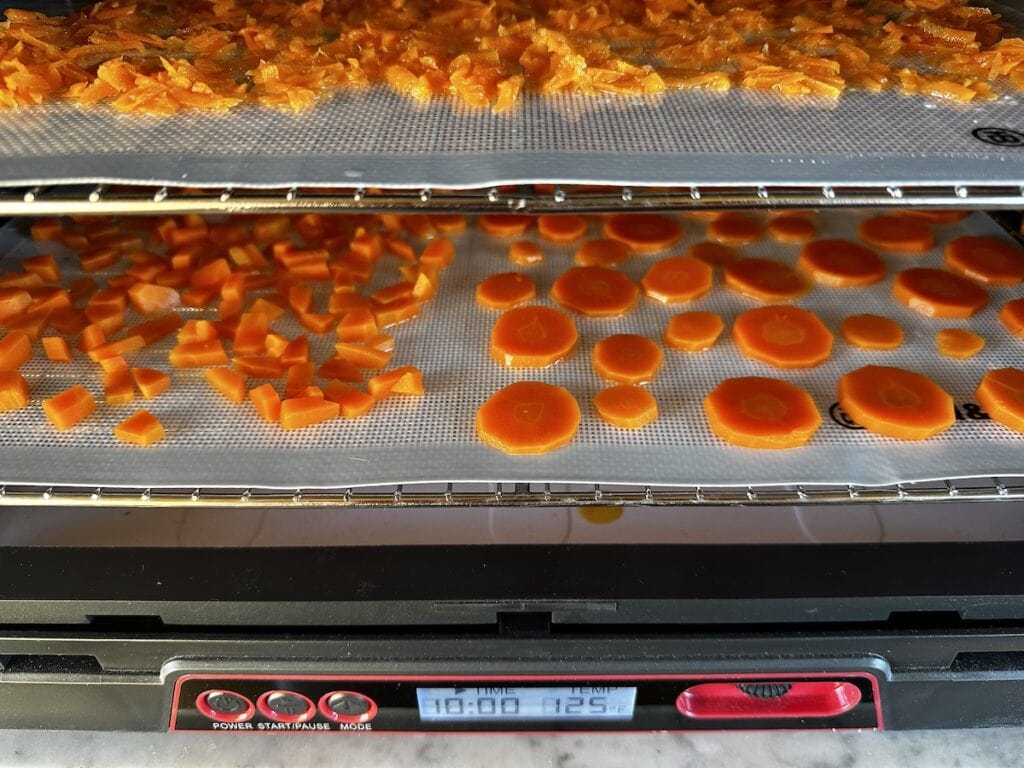
- Arrange the carrots slices, diced pieces, or shreds on the trays of the dehydrator in a single layer, not touching, lined with parchment paper. Or, use the fruit leather liners that work with your dehydrator.
- If you do not use a liner, even the carrot coins (slices) will fall through the tray as they dry unless they are very large in diameter.
- Set the food dehydrator at 125º F for 10 hours. Larger carrot slices and diced pieces may take up to 12 hours. Shredded pieces may only take 8 hours. It will depend on your dehydrator and the humidity.
- Rotate trays if needed halfway through the dehydration process for evening drying.
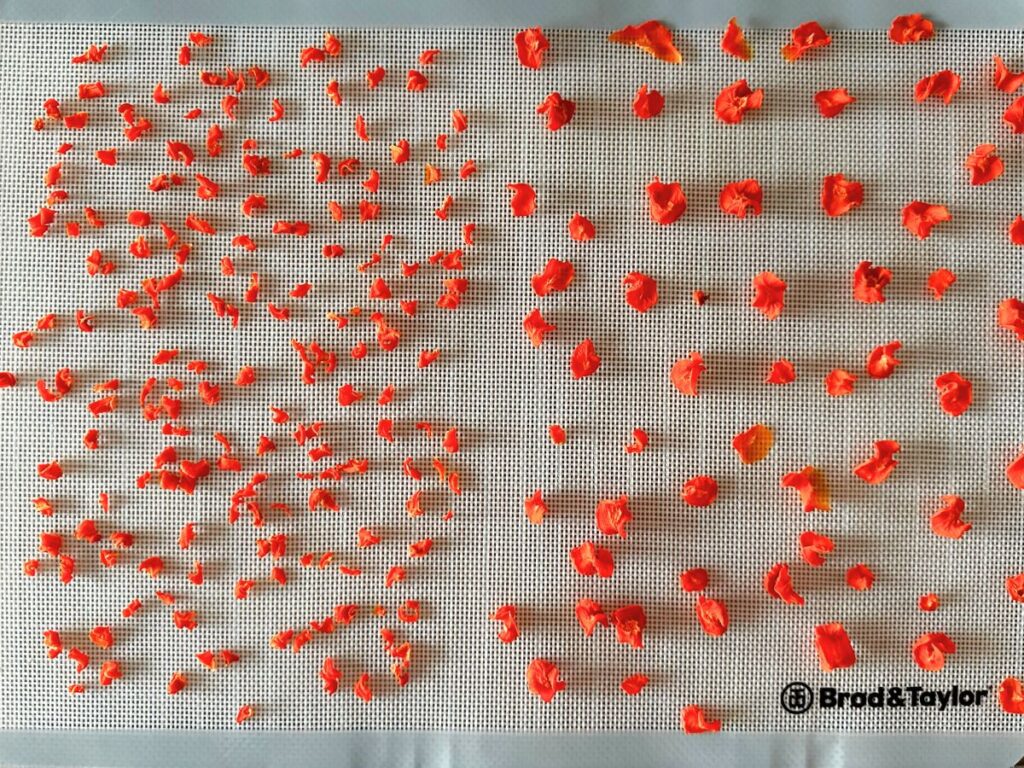
- Carrots are fully dehydrated when they are no longer bendy and snap. They will be crisp and light.

STEP 5: Condition and Store
Conditioning is not necessary for all types of dehydrated foods, but it can help improve the shelf life and quality of certain items, including carrots. It is an optional step that helps ensure their moisture content is evenly distributed and will then completely dry before storage in airtight glass jars or containers.
- Allow the dehydrated carrots to cool completely after drying them.
- Place the cooled dehydrated carrots in airtight containers such as jars or resealable bags.
- Leave the containers sealed for about 7 to 10 days, shaking or stirring them daily to redistribute any remaining moisture.
- Check the containers during this conditioning period for any signs of condensation or moisture. If you notice any, return the carrots to the dehydrator for further drying.
- After the conditioning period, the dehydrated carrots should have an even moisture content and can be stored in a cool, dry place for long-term use.
How to Store Dehydrated Carrots
Dehydrated carrots, when stored properly, can last for at least a year or beyond. The darker and cooler the environment, the longer they will last as long as the container is airtight.
- Store dried carrots in airtight containers, such as mason jars or resealable freezer bags, to prevent moisture and air exposure.
- Label the containers with the date of dehydration and contents for reference.
- Keep the dehydrated carrots in a cool, dry place away from direct sunlight or place in the freezer.
- For longer storage, vacuum-seal or use oxygen absorbers to extend the shelf life of dehydrated carrots.
How to Use Dehydrated Carrots
Dehydrated carrots are a convenient ingredient to have on hand. They are readily available for use in various recipes without the need for peeling, chopping, or any additional prep work.
Simply rehydrate them by soaking them in hot water for 15 minutes or add them directly to dishes as desired!
The first time my kids tried rehydrated carrots in soup we all discussed how much concentrated flavor those carrot pieces have! They truly are delicious.
- Rehydrate for soups and stews: Add dehydrated carrots directly to your soups, stews, ramen, or broths during cooking. They will absorb the liquid and regain their texture, flavor, and nutritional value.
- Blend into powder: I am a huge fan of making dehydrated vegetable powders such as spinach powder. Grind dehydrated carrots into a powder using a spice or coffee grinder or a food processor. The resulting carrot powder can be used as a natural food coloring, added to smoothies, or incorporated into baked goods or soups for added flavor and nutritional benefits.
- Use in rice dishes: Rehydrate and mix into cooked rice dishes such as fried rice or Mexican rice while camping for added nutritional benefits!
- Toss into salads: Once rehydrated you can use dehydrated shredded carrot pieces or bits in a salad for an added subtle carrot flavor.
- Blend into marinara sauces and dips: Sprinkle dried carrot shreds into sauce or Grind or crush dehydrated carrots to incorporate them into dressings or dips to enhance both taste and nutritional content.
- Baking: Mix dehydrated carrot shreds into a quick bread, carrot cake, or muffin batter. Yum!
Enjoy the convenience and health benefits of dehydrated carrots in your culinary creations!

FAQS: Dehydrating Carrots
Here are some answers to commonly asked questions about dehydrating carrots.
Can I dehydrate raw carrots?
Yes, you can dehydrate raw carrots. Dehydrating raw carrots is a common practice as it avoids the blanching process (and takes less time) but the color and flavor may not be preserved for as long as carrots that are dried after blanching them. Blanching results in dehydrated carrots that can be stored for long periods of time, a year or more.
Do carrots dehydrate well?
Yes, carrots dehydrate well! Carrots have a high water content, which makes them suitable for the dehydration process. When properly dehydrated, carrots retain their bright orange color, sweet flavor, and many of their nutrients. They become lightweight and crisp, and have an extended shelf life, making them a convenient and versatile ingredient for various culinary uses.
Is it necessary to blanch carrots before dehydrating?
Blanching carrots before dehydrating is not strictly necessary, but it is a recommended step for optimal results. Blanching helps inactivate enzymes present in carrots that can cause color and flavor degradation during drying. It also helps to partially cook the carrots, making rehydration easier and faster when using the dehydrated carrots later.
While you can choose to skip the blanching step, it may result in slightly inferior quality and potentially longer rehydration times for the carrots.
How long does dehydrated carrot last?
When stored properly in airtight containers in a cool, dry place, dehydrated carrots can last anywhere from 6 months to 1 year. The exact shelf life can vary depending on factors such as the moisture content of the carrots, storage conditions, and the effectiveness of the sealing method. It’s always recommended to check for any signs of moisture, mold, or deterioration before consuming dehydrated carrots that have been stored for an extended period.
Do dehydrated carrots lose nutrients?
Dehydrated carrots experience minimal nutrient loss during the dehydration process, particularly in terms of water-soluble vitamins like vitamin C and B vitamins. However, many of the other nutrients, including fiber, minerals, and antioxidants, remain relatively stable in dehydrated carrots.
While the concentration of these nutrients becomes more concentrated in the dehydrated form, it’s important to note that the overall nutritional value can still be significant. Dehydrated carrots can still be a valuable addition to a well-rounded diet, offering some nutrients in a concentrated and shelf-stable form.

Can I dehydrate whole baby carrots?
Yes, you can dehydrate whole baby carrots but I definitely recommend slicing them for efficiency. Dehydrating whole baby carrots will require a longer drying time compared to sliced carrot rounds or shredded carrots. The larger surface area of sliced or shredded carrots allows for quick moisture evaporation during the dehydration process.
If you choose to dehydrate whole baby carrots, it’s recommended to ensure they are uniform in size for more consistent drying. Additionally, monitor the drying process closely and adjust the drying time as needed to ensure they are fully dehydrated and reach a crispy texture.
Why are my dehydrated carrots turning white?
If your dehydrated carrots are turning white, it is simply “blanching” or “blush.” This can happen when the natural sugars in the carrots rise to the surface during the dehydration process and crystallize, creating a whitish appearance. To minimize or prevent this issue, ensure that you blanch the carrots properly before dehydrating them and follow the recommended drying temperature and time for carrots.
Is it better to freeze or dehydrate carrots?
The choice between freezing and dehydrating carrots depends on your preferences and intended use. Freezing is a better option if you want to preserve the fresh characteristics of carrots and use them in your home kitchen, while dehydrating is suitable for creating long-lasting, versatile, and convenient carrot products for backpacking meals or long-term storage.
Consider your specific needs, space availability, and preferred texture when choosing between freezing and dehydrating carrots.

Fresh to Dry Yield of Dehydrated Carrots
When dehydrating one pound (16 ounces) of fresh carrots, the yield of dehydrated carrots can vary depending on factors such as the moisture content and size of the carrots. As a general estimate, you can expect the following yield:
Weight: Dehydrated carrots typically weigh around 1/4th to 1/5th of their original weight after drying. So, you can anticipate a yield of approximately 4 to 5 ounces (113 to 142 grams) of dehydrated carrots if you start with one pound.
Volume: The volume of dehydrated carrots will be significantly reduced compared to fresh carrots. As a rough approximation, the dehydrated carrots will occupy around 1/8th to 1/10th of the original volume. This translates to approximately 1 1/4 to 1 1/2 cups of dehydrated carrot pieces as a result of drying one pound of fresh carrots.
The Wrap-Up on Dehydrating Carrots
Dehydrating carrots provides a fantastic solution for backpacking meals and preparing soups, stews, and various other recipes. The convenience and health benefits make them a valuable addition to your meals.
With their lightweight nature and long shelf life, dehydrated vegetables offer a nutrient-dense option for outdoor adventures or everyday cooking.
You’ll enjoy the convenience, savor the health benefits, and enjoy the culinary possibilities that dehydrated carrots bring to your kitchen and backpacking adventures!

Dehydrated Carrots
Equipment
- Parchment paper or dehydrator mats
- Airtight storage such as mason jars
Ingredients
- 1 lb Fresh carrots (2 medium carrots = 1 cup sliced carrot = 3 tablespoons dehydrated)
Instructions
- Wash carrots by running them under water and using a scrub brush to remove dirt and residue.
- Peel the carrots thoroughly.
- Remove the top end of the carrot (and any greens) where the stem is attached.
- For Diced – Chop carrots into 1/4 inch dice pieces.
- For Slices – Slice the carrots into 1/8" thick rounds.
- For Shreds – Use a food processor with the shredding attachment or use a box grater.
- Blanch the carrots in boiling water.
- For diced and sliced carrots blanch for 4 minutes and strain.
- For shredded carrots blanch for 2 minutes and strain.
- Spread carrots out on a clean terrycloth or dish towel to pat dry and remove surface moisture.
- Arrange the carrots slices, diced pieces, or shreds on your dehydrator trays in a single layer, not touching, lined with parchment paper. Or, use the fruit leather liners that work with your dehydrator.
- Set the dehydrator at 125º F for 10 hours. Larger carrot slices and diced pieces may take up to 12 hours. Shredded pieces may only take 8 hours. It will depend on your dehydrator and the humidity.
- Cool carrots after they fully dry. Carrots are fully dehydrated when they are no longer bendy and snap
- Condition for one week and put into airtight dry storage for one year.
Notes
- Place the cooled dehydrated carrots in airtight containers such as jars or resealable bags.
- Leave the containers sealed for about 7 to 10 days, shaking or stirring them daily to redistribute any remaining moisture.
